In the Age of AI, Our Communication Has Become More Rigid, Hasn't It?
Emails Used to Feel Warmer
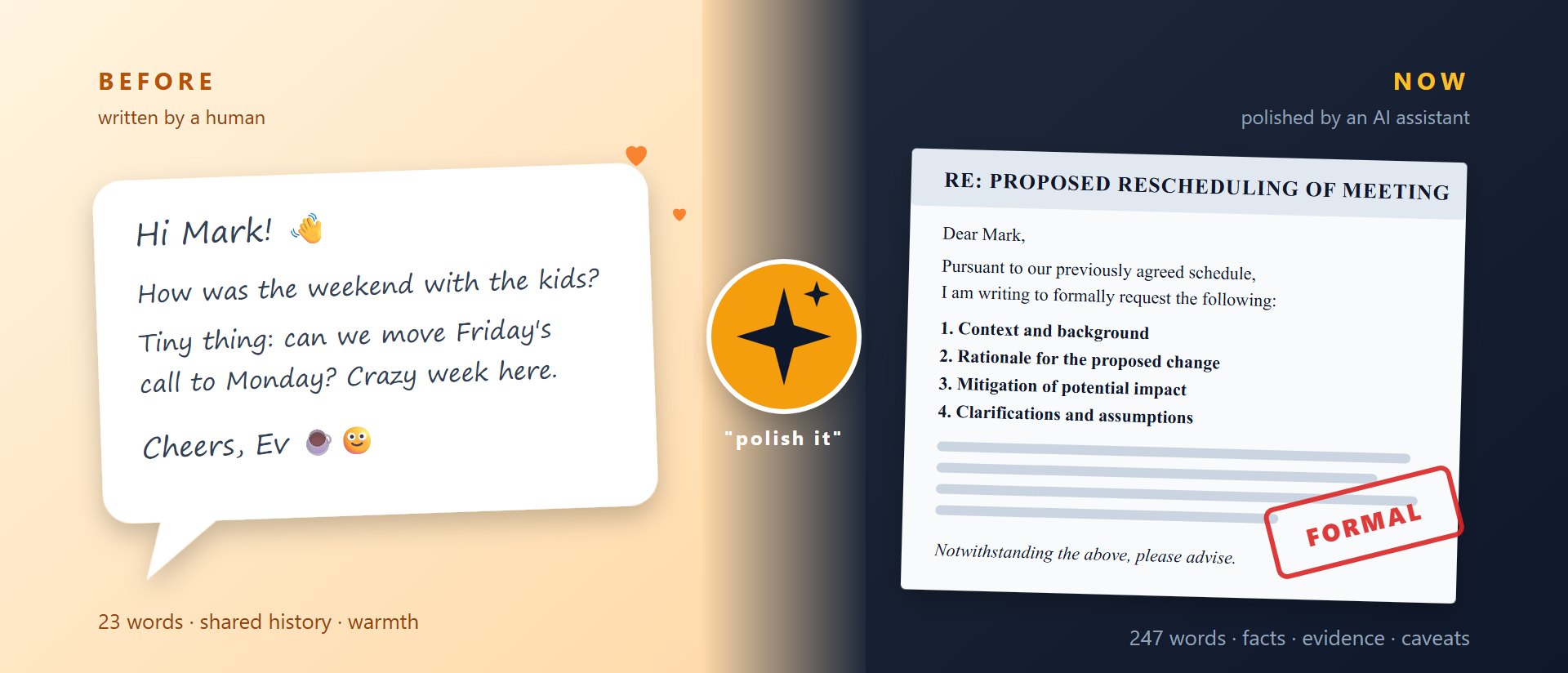
Think about the emails you got from good clients and partners a few years ago. They asked how your weekend went, made a small joke and ended with something friendly. You could hear the person behind the words.
Now look at your inbox today. Same people, same good relationships, but the messages feel different. They are long, careful and formal. Sometimes it feels like you are writing to a lawyer, not to someone you have worked with for years.
Nothing bad happened between you. The reason is much simpler: more and more of us write our emails with ChatGPT, Claude and other AI tools.
Why AI Makes Simple Messages Sound Formal
When writing emails, AI often makes simple messages sound overly formal and complicated. It tends to explain too much, defend against objections nobody has raised, and use legal-sounding language that creates distance rather than trust.
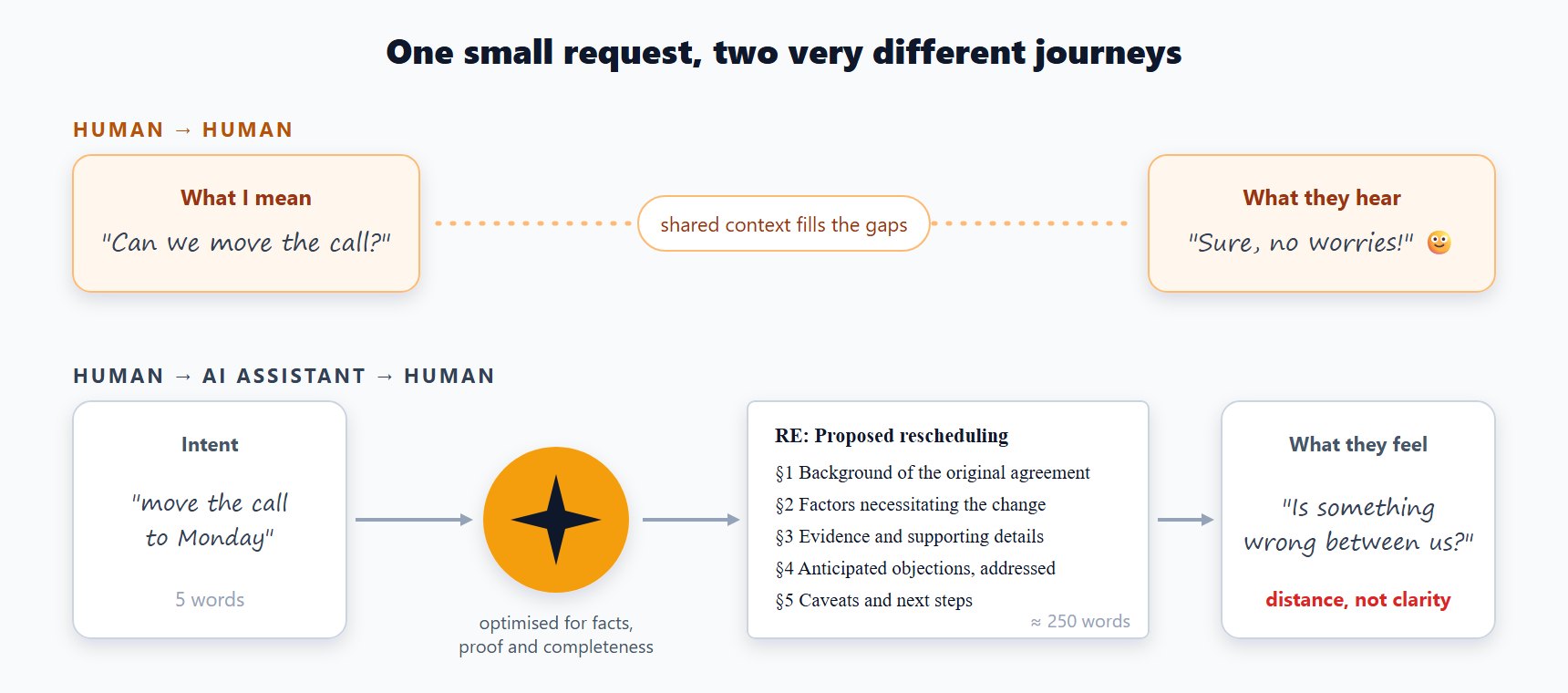
But when you've known someone for years, you don't need three paragraphs to explain a simple schedule change. "Can we move Friday's call to Monday?" is enough. A trusted colleague understands what you mean without all the extra detail.
AI misses this shared history. It turns a short, friendly note into a full explanation, and the result sounds more like a legal document than a conversation between people who trust each other.
Facts Are Not the Same as Understanding
AI tools learned to write from huge amounts of manuals, contracts and company policies. So they are very good at facts, reasons and proof, and that is exactly what they put into every email.
But good relationships don't run on proof. They run on trust, goodwill and the little things you both already know. When a simple email arrives full of background, reasons and caveats, the other person may quietly wonder: "Why so formal? Is something wrong?"
And very often the other side uses AI to reply. So the formal tone grows on both sides, until two old friends are writing to each other like two law firms.
How to Bring the Warmth Back
We are not against AI. We build AI software every day, and it is great for code, technical documents and long reports. But for a quick note to someone who knows you, your own words work better.
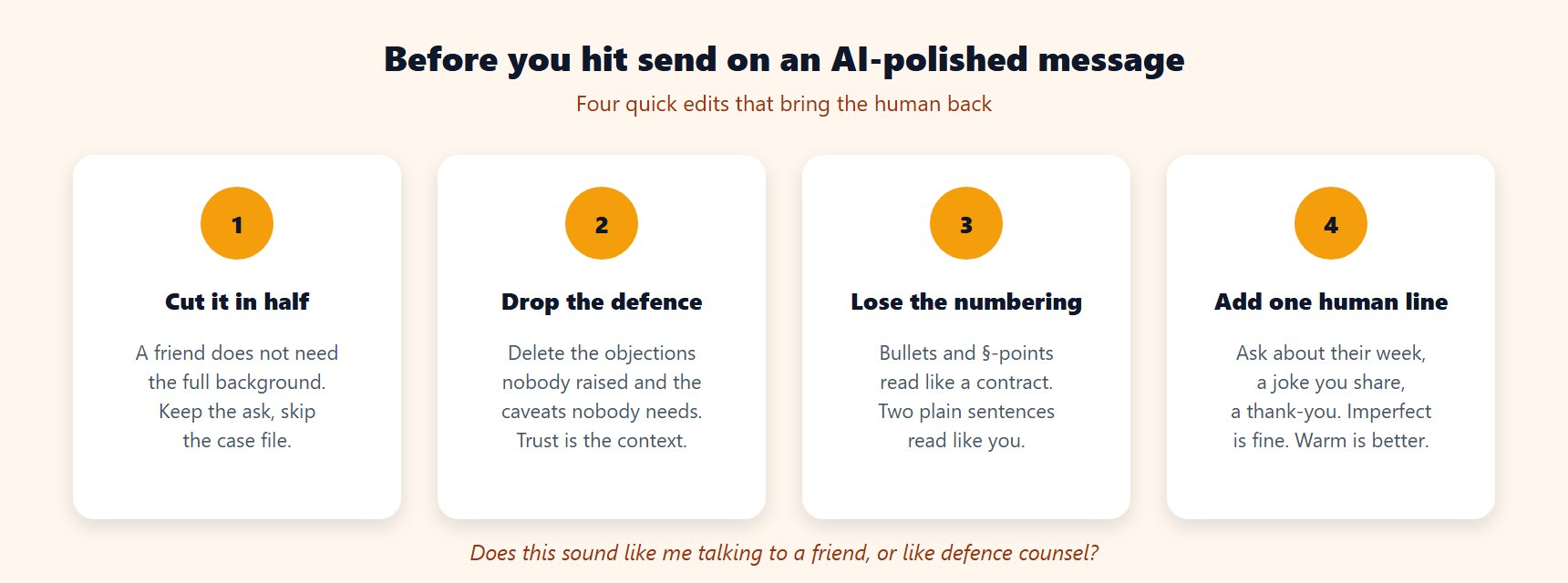
Before you send an AI-polished email, read it once and ask yourself: does this sound like me talking to a friend, or like a lawyer?
If it sounds like a lawyer, make it shorter. Remove the explanations nobody asked for. Drop the numbered points. Add one line that only you would write. It doesn't have to be perfect. It just has to sound like you.
Related Articles
Beyond the AI Euphoria: Are We Just Trading Payroll for AI Bills?
8 min read
A company lets five developers go to save €25,000 a month, and the monthly AI bill turns out to be €25,000 too. An honest look at AI implementation ROI, hidden AI costs and why faster coding does not mean faster delivery.
AI-First Development: The New Era of Software Engineering (and How to Avoid Million-Dollar Pitfalls)
4 min read
AI-First Development can cut software budgets by up to 60%. Without review, security checks, and clear architecture, it can also cost millions. Here is how to get the savings without the risk.